As winter approaches, the fishing season ends season ends. Today I made my last fishing attempt. As it rains and pours, the fish go to the deeper part of a body of water, and become mostly inactive. Trout are for the most part active, but their season ends in September, when they breed. Perch and sunfish can be fished for all year. Later in the year you might find some posts from Ice fishing for perch. I'm sorry I haven't made a post in a very long time, but then again, we haven't gone fishing in a very long time.
http://upload.wikimedia.org/wikipedia/commons/7/7f/YellowPerch.jpg
Saturday, October 1, 2011
Monday, September 5, 2011
Fly Tying
Well, as you all know, I some times fly fish and sometimes just plain old "fish". It mostly depends on the area, such as if I have enough space to cast or do I have the right flies to catch the fish that live there. This post will be about tying, or making flies.
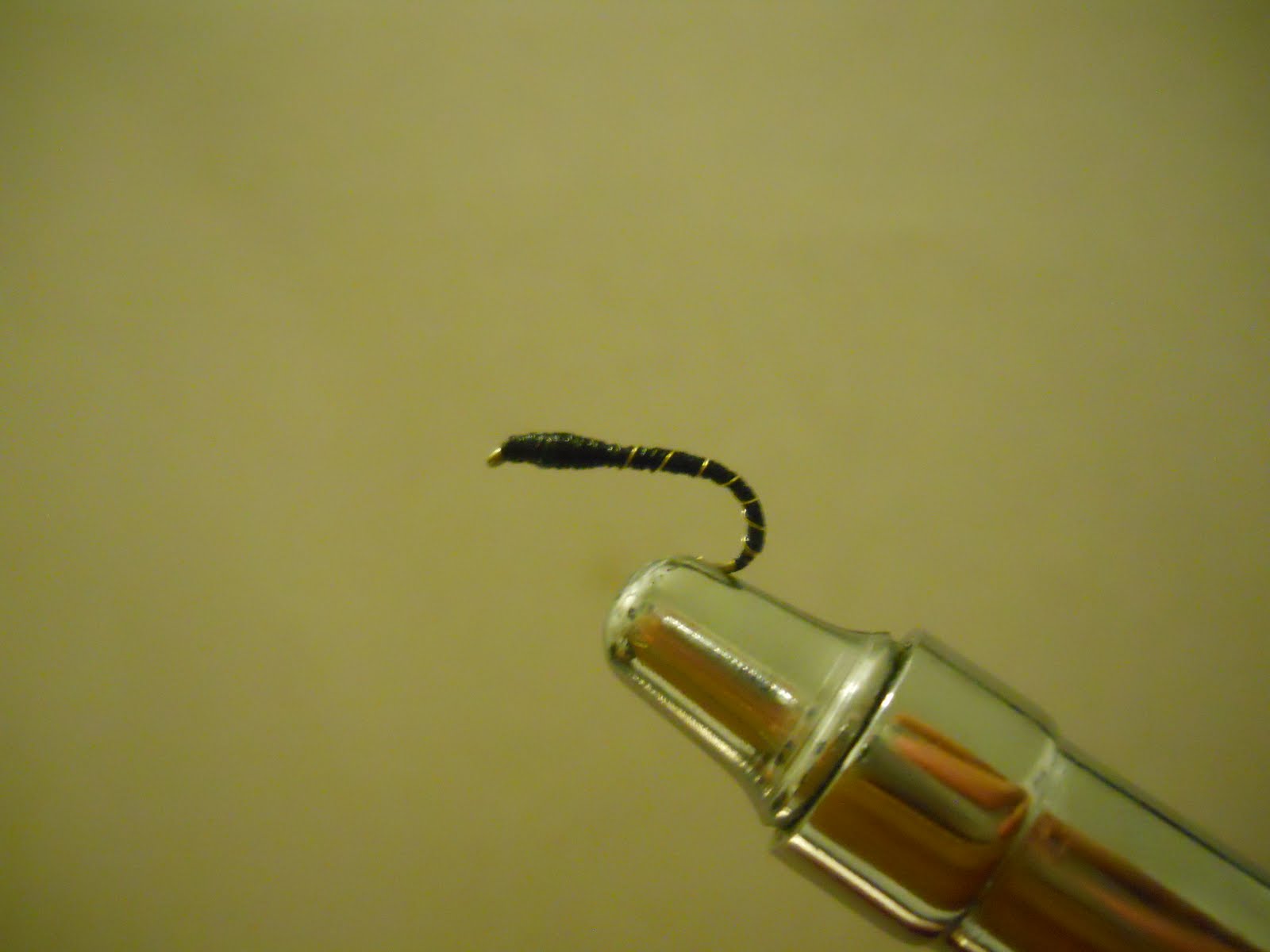
A Buzzer Larvae that I made. Pretty darn simple.
A Green Highlander That I made. Yes, I know it is not a real Green Highlander fly, It is just a Mickey Finn bucktail streamer modified to look like a Green Highlander.
A "real" Mickey Finn streamer I made.
A Mosquito Dry Fly I made. It rests at the surface so when a fish comes along, It jumps out of the water to get the fly. Pretty spectacular. That is one of the beauties of fly fishing.
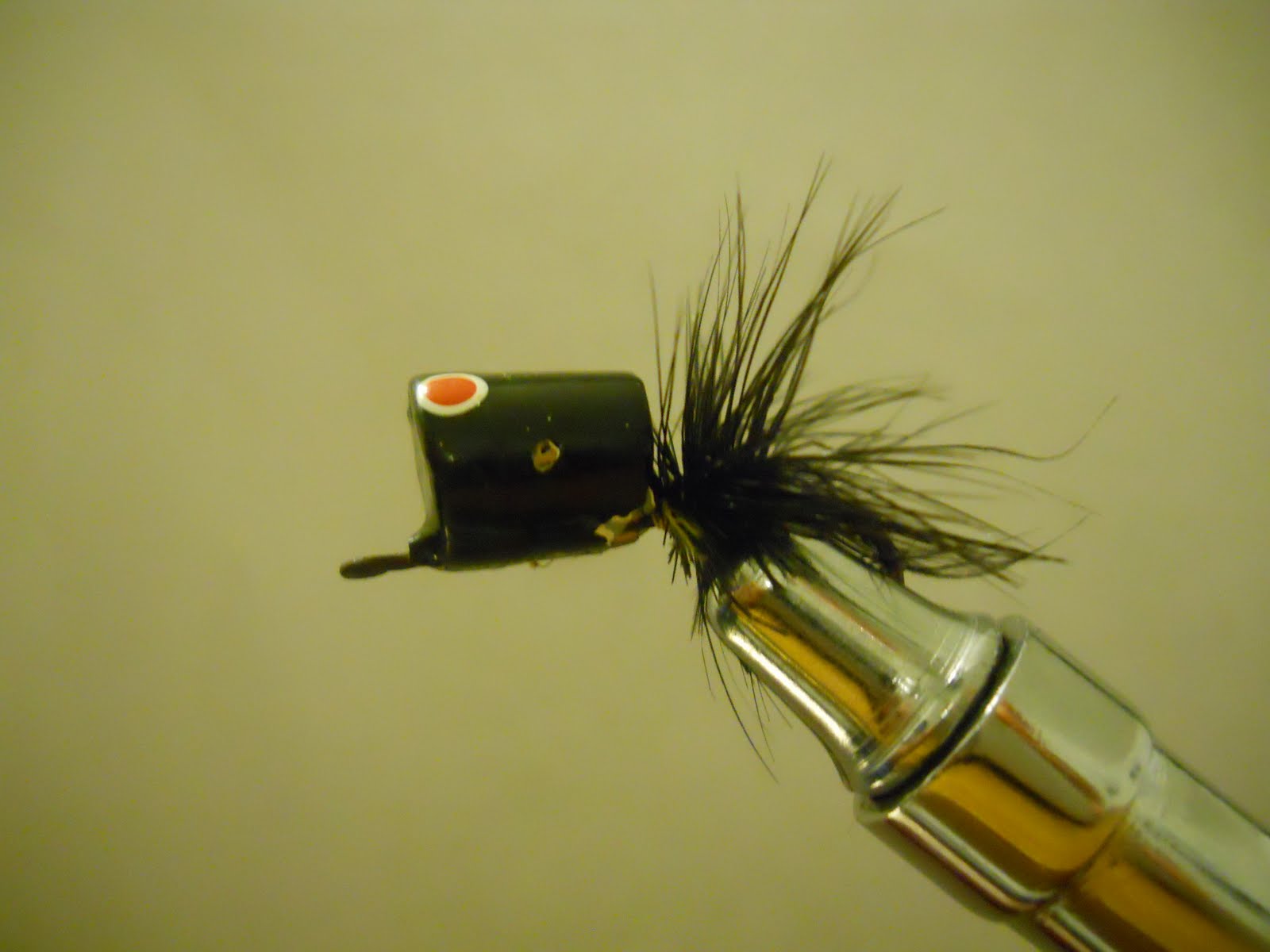
The largest fly in my arsenal, A fly popper. The head is made of cork so it floats at the surface. When you pull on the line it dives, making a popping sound. I didn't make this one, along with the others, but with this one the tail feathers came off, so I tied some bucktail on. We found a case full of them in the garage.
Another popper. This one has frog legs on it.
And a 'nothern!
This next part is a step by step gallery of tying a fly. I tried to take a video, but that didn't work out to well.... The fly I am tying here is the purple panther streamer, a design I made myself.
Step 1: Tie on black tread.
Step 2: Wrap It around to the back of the hook. This makes a nice structure to put your materials on.
Step 3: Tie on wire tinsel and grey floss.
Step 4: Wrap floss and tinsel up to head.
Step 5: Tie on purple bucktail.
Step 5: Tie on grizzly hackle.
Step 6: Wrap hackle around head.
Step 7: Snip off access.
The materials needed
Left to right:
Top row: Hooks, wire tinsel, grey floss, black thread and bobbin.
Middle row: cement, whip finish tool, scissors.
Bottom row: Exacto knife, purple bucktail
Left to right:
Top row: Hooks, wire tinsel, grey floss, black thread and bobbin.
Middle row: cement, whip finish tool, scissors.
Bottom row: Exacto knife, purple bucktail
Saturday, September 3, 2011
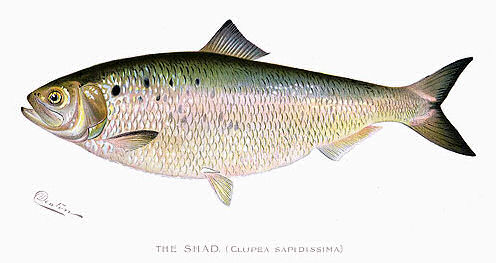
The American Shad
Family: Clupeidae
Diet: plankton, shrimp, fish eggs, very rarely other fish
Average size: 5.9-7.9 lbs
World record: 11lbs 4oz
Average size: 5.9-7.9 lbs
World record: 11lbs 4oz
The American shad is one of the most popular anadromous fishes in North America. Every year shad swim hundreds of miles upstream to spawn. I have never caught one because shad fishing is illegal in NY State. What makes this fish so popular is its numbers, its strength, and its size. Here is a picture from the internet:
Wednesday, August 24, 2011
The West Canada Creek
Tuesday, August 23, 2011
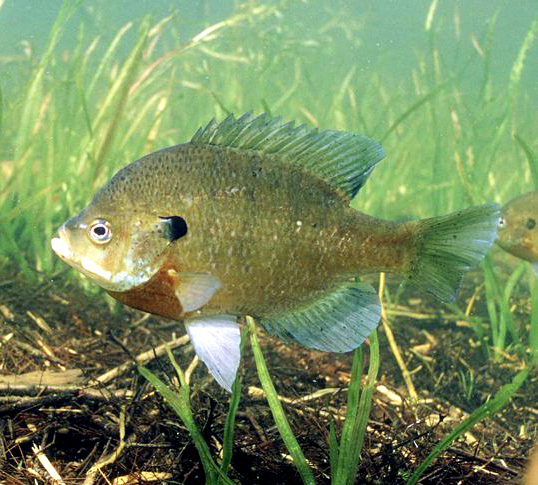
Bluegills
I went fly fishing in my uncles pond with dry fly and caught a bunch of bluegills. They may be small, but they have a fighting spirit and are fun to catch on a fly rod. I caught about 10, but I could've caught more because I went fishing for only a 1/2 hour. Here is a few that where worth taking pictures of.
This is one of the biggest bluegills I have ever caught. And take a look at that ear! (the ear is the flap that hangs off the gill. No it is not a real ear.) It was early dawn.
An averaged sized bluegill.
I lost the original bait I used, so here is the closest thing I have to it; a large mosquito dry fly I made myself.
Wednesday, August 10, 2011
Bass Along the Mohawk
For a fishing trip, we decided to go fishing in the Mohawk river. The Mohawk River is the source of water for the Erie Canal. It's average depth is about 5 feet, but reaches 8 feet in some places. It is well oxygenated and has a moderate speed, making it the perfect Smallmouth Bass river. Most of its population includes Smallmouth bass and Shiners, but its population also includes Tiger Muskellunge, Walleye, and Largemouth Bass. Here are some pictures of the trip.
The Mohawk River
The kind of bait we used: spinner-bait. The rotating blade reflects light and attracts fish. An all-around good bait which can catch anything but bottom-feeders, and my personal favorite.
Friday, August 5, 2011
Catfish
I was fishing for bass in the pond at night when I hooked this big feller.
A nice size catfish if I do say so myself. Man, these fish fight like there's no tomorrow. I don't know how long he is, or how much he weighs. I'd say about 16" and 4-6lbs. I caught him at night, as you can see. I used the small jig I showed you earlier. I'm surprised that a catfish would go for an artificial bait. I caught another bass while I was at it but the camera didn't work. Here's one Michael caught.
Subscribe to:
Posts (Atom)